[TIL] Spring Skills - Membership Registration Implementation
Spring membership registration and login implementation, layer roles, PasswordEncoder encryption, and JWT issuance and cookie storage flow
한국어 원문은 여기에서 볼 수 있습니다.
What I studied
Membership registration implementation
Membership registration design
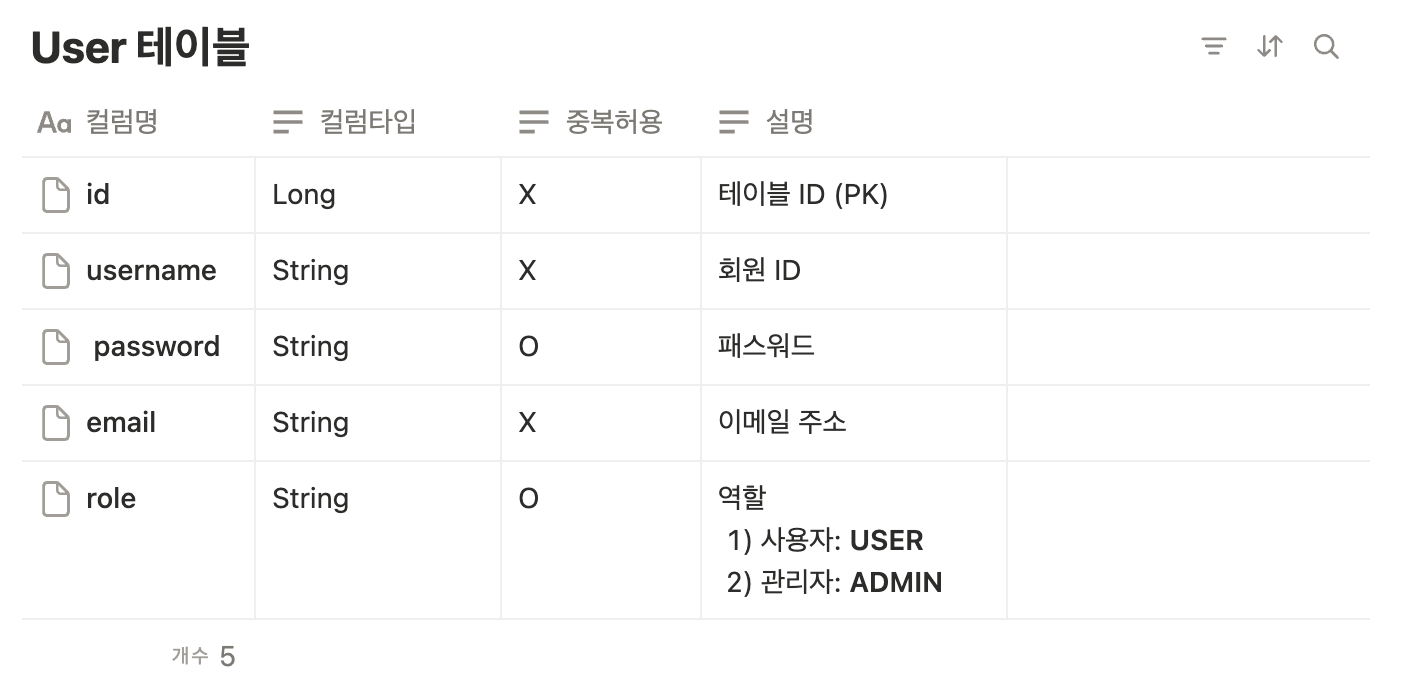
Implement @Entity class mapped to member DB
1
2
3
4
5
6
7
8
9
10
11
12
13
14
15
16
17
18
19
20
21
22
23
24
25
26
27
28
29
30
  package com.sparta.springauth.entity;

  import jakarta.persistence.*;
  import lombok.Getter;
  import lombok.NoArgsConstructor;
  import lombok.Setter;

  @Entity
  @Getter
  @Setter
  @NoArgsConstructor
  @Table(name = "users")
  public class User {
      @Id
      @GeneratedValue(strategy = GenerationType.IDENTITY)
      private Long id;

      @Column(nullable = false, unique = true)
      private String username;

      @Column(nullable = false)
      private String password;

      @Column(nullable = false, unique = true)
      private String email;

      @Column(nullable = false)
      @Enumerated(value = EnumType.STRING)
      private UserRoleEnum role;
  }
@Enumerated(value = EnumType.STRING)This is an annotation used when storing EnumType in a DB column.
If you use the
EnumType.STRINGoptions, the name of the enum is stored in the DB as is.USER(Authority.USER)→ USER
How to authorize administrator membership
Requires entry of ‘administrator sign-up token’: Use of randomly generated tokens
ex)"AAABnvxRVklrnYxKZ0aHgTBcXukeZygoC"Usually, in the field, the above authority is not granted.
If a hacker steals the password, he or she can easily obtain administrator privileges.
Actually,
Implementation of an administrator page that can grant ‘administrator’ privileges
Implementation of approval process by approver → Grant administrator authority
Implemented like this:
Understanding Password Encryption
Password encryption is mandatory under the ‘Information and Communications Network Act and Personal Information Protection Act’.
After encryption, password storage is required. - Plaintext → (Encryption algorithm) → Ciphertext ex) “nobodynobody” → “$2a$10$..”
1 2 3 4 5 6 7 8 9 10 11 12 13 14 15 16
- Even if a hacker steals Alice’s password information in the DB, the actual password cannot be known. - Therefore, decryption is impossible **one-way algorithm must be used** - **One-way encryption algorithm** - Encryption: Plaintext → (Encryption algorithm) → Ciphertext - Decryption: **Not possible** ~~(ciphertext → (encryption algorithm) → plaintext)~~ - **Then, does the user have to remember the encrypted password when logging in?** - Password confirmation procedure 1. User enters “ID, password (plain text)” to log in → Request to log in to server 1. Encrypt the password (plaintext) on the server 2. Plaintext → (Encryption algorithm) → Ciphertext 2. **Check whether it matches the “ID, password (ciphertext)” stored in the DB**- Password Matching
- Password Matching
PasswordEncoder, which we saw as an example of manual bean registration, is a password encryption method provided by the security.It is also widely used as it has a function that compares the password entered by the user with the encrypted and stored password to check whether it matches.
1
2
3
4
5
6
7
8
9
10
11
12
    ```java
    // 사용예시
    // 비밀번호 확인
    if(!passwordEncoder.matches("사용자가 입력한 비밀번호", "저장된 비밀번호")) {
    		   throw new IllegalAccessError("비밀번호가 일치하지 않습니다.");
     }
    ```

    - boolean matches(CharSequence rawPassword, String encodedPassword);
        - rawPassword: Password entered by the user

        - encodedPassword: Password encrypted and stored in DB
Implementation of membership registration API
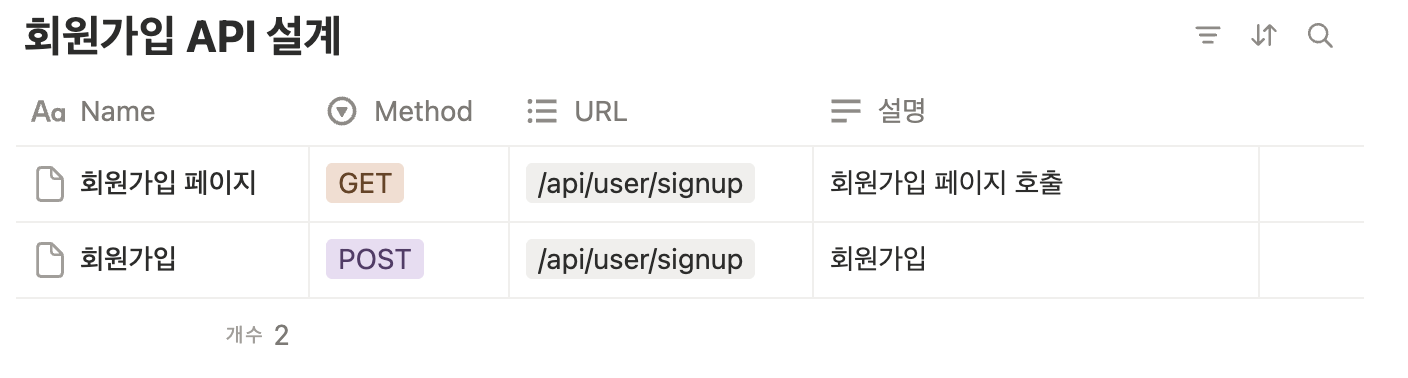
SignupRequestDto
1
2
3
4
5
6
7
8
9
10
11
12
13
14
  package com.sparta.springauth.dto;

  import lombok.Getter;
  import lombok.Setter;

  @Getter
  @Setter
  public class SignupRequestDto {
      private String username;
      private String password;
      private String email;
      private boolean admin = false;
      private String adminToken = "";
  }
UserService
1
2
3
4
5
6
7
8
9
10
11
12
13
14
15
16
17
18
19
20
21
22
23
24
25
26
27
28
29
30
31
32
33
34
35
36
37
38
39
40
41
42
43
44
45
46
47
48
49
50
51
52
53
54
55
56
57
  package com.sparta.springauth.service;

  import java.util.Optional;

  import org.springframework.security.crypto.password.PasswordEncoder;
  import org.springframework.stereotype.Service;

  import com.sparta.springauth.dto.SignupRequestDto;
  import com.sparta.springauth.entity.User;
  import com.sparta.springauth.entity.UserRoleEnum;
  import com.sparta.springauth.repository.UserRepository;

  @Service
  public class UserService {

      private final UserRepository userRepository;
      private final PasswordEncoder passwordEncoder;

      public UserService(UserRepository userRepository, PasswordEncoder passwordEncoder) {
          this.userRepository = userRepository;
          this.passwordEncoder = passwordEncoder;
      }

      // ADMIN_TOKEN
      private final String ADMIN_TOKEN = "AAABnvxRVklrnYxKZ0aHgTBcXukeZygoC";

      public void signup(SignupRequestDto requestDto) {
          String username = requestDto.getUsername();
          String password = passwordEncoder.encode(requestDto.getPassword());

          // 회원 중복 확인
          Optional<User> checkUsername = userRepository.findByUsername(username);
          if (checkUsername.isPresent()) {
              throw new IllegalArgumentException("중복된 사용자가 존재합니다.");
          }

          // email 중복확인
          String email = requestDto.getEmail();
          Optional<User> checkEmail = userRepository.findByEmail(email);
          if (checkEmail.isPresent()) {
              throw new IllegalArgumentException("중복된 Email 입니다.");
          }

          // 사용자 ROLE 확인
          UserRoleEnum role = UserRoleEnum.USER;
          if (requestDto.isAdmin()) {
              if (!ADMIN_TOKEN.equals(requestDto.getAdminToken())) {
                  throw new IllegalArgumentException("관리자 암호가 틀려 등록이 불가능합니다.");
              }
              role = UserRoleEnum.ADMIN;
          }

          // 사용자 등록
          User user = new User(username, password, email, role);
          userRepository.save(user);
      }
  }
UserController
1
2
3
4
5
6
7
8
9
10
11
12
13
14
15
16
17
18
19
20
21
22
23
24
25
26
27
28
29
30
31
32
33
34
35
36
  package com.sparta.springauth.controller;

  import org.springframework.stereotype.Controller;
  import org.springframework.web.bind.annotation.GetMapping;
  import org.springframework.web.bind.annotation.PostMapping;
  import org.springframework.web.bind.annotation.RequestMapping;

  import lombok.RequiredArgsConstructor;

  import com.sparta.springauth.dto.SignupRequestDto;
  import com.sparta.springauth.service.UserService;

  @Controller
  @RequestMapping("/api")
  @RequiredArgsConstructor
  public class UserController {

      private final UserService userService;

      @GetMapping("/user/login-page")
      public String loginPage() {
          return "login";
      }

      @GetMapping("/user/signup")
      public String signupPage() {
          return "signup";
      }

      @PostMapping("/user/signup")
      public String singup(SignupRequestDto requestDto) {
          userService.signup(requestDto);

          return "redirect:/api/user/login-page";
      }
  }
UserRepository
1
2
3
4
5
6
7
8
9
10
11
12
13
14
15
  package com.sparta.springauth.repository;

  import java.util.Optional;

  import org.springframework.data.jpa.repository.JpaRepository;

  import com.sparta.springauth.entity.User;

  public interface UserRepository extends JpaRepository<User, Long> {

      Optional<User> findByUsername(String username);

      Optional<User> findByEmail(String email);

  }
Login implementation
Login API design
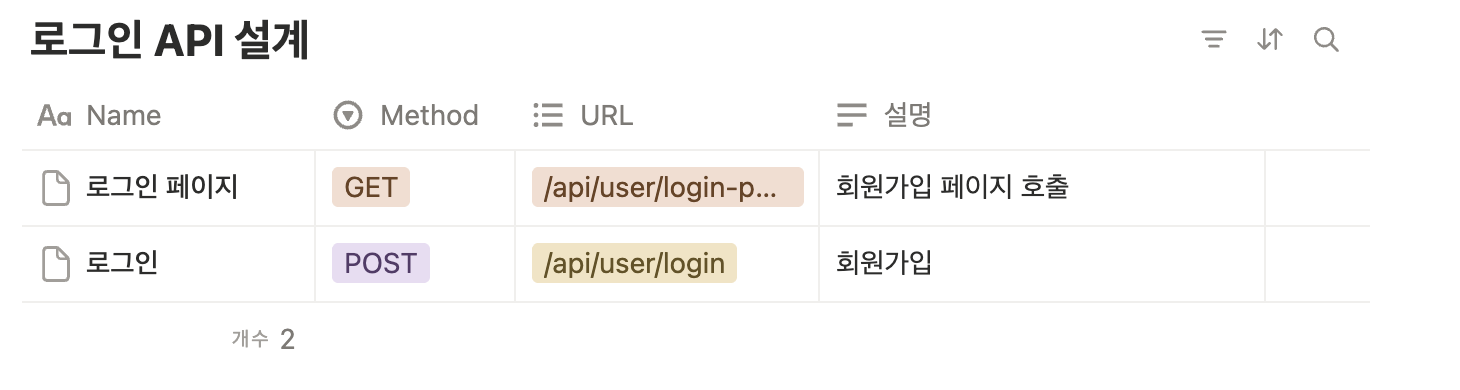
LoginRequestDto
1
2
3
4
5
6
7
8
9
10
11
  package com.sparta.springauth.dto;

  import lombok.Getter;
  import lombok.Setter;

  @Setter
  @Getter
  public class LoginRequestDto {
      private String username;
      private String password;
  }
UserService
1
2
3
4
5
6
7
8
9
10
11
12
13
14
15
16
17
18
19
20
21
22
23
24
25
26
27
28
29
30
31
32
33
34
35
36
37
38
39
40
41
42
43
44
45
46
47
48
49
50
51
52
53
54
55
56
57
58
59
60
61
62
63
64
65
66
67
68
69
70
71
72
73
74
75
76
77
78
79
80
  package com.sparta.springauth.service;

  import java.util.Optional;

  import jakarta.servlet.http.HttpServletResponse;

  import org.springframework.security.crypto.password.PasswordEncoder;
  import org.springframework.stereotype.Service;

  import lombok.RequiredArgsConstructor;

  import com.sparta.springauth.dto.LoginRequestDto;
  import com.sparta.springauth.dto.SignupRequestDto;
  import com.sparta.springauth.entity.User;
  import com.sparta.springauth.entity.UserRoleEnum;
  import com.sparta.springauth.jwt.JwtUtil;
  import com.sparta.springauth.repository.UserRepository;

  @Service
  @RequiredArgsConstructor
  public class UserService {

      private final UserRepository userRepository;
      private final PasswordEncoder passwordEncoder;
      private final JwtUtil jwtUtil;

      // ADMIN_TOKEN
      private final String ADMIN_TOKEN = "AAABnvxRVklrnYxKZ0aHgTBcXukeZygoC";

      public void signup(SignupRequestDto requestDto) {
          String username = requestDto.getUsername();
          String password = passwordEncoder.encode(requestDto.getPassword());

          // 회원 중복 확인
          Optional<User> checkUsername = userRepository.findByUsername(username);
          if (checkUsername.isPresent()) {
              throw new IllegalArgumentException("중복된 사용자가 존재합니다.");
          }

          // email 중복확인
          String email = requestDto.getEmail();
          Optional<User> checkEmail = userRepository.findByEmail(email);
          if (checkEmail.isPresent()) {
              throw new IllegalArgumentException("중복된 Email 입니다.");
          }

          // 사용자 ROLE 확인
          UserRoleEnum role = UserRoleEnum.USER;
          if (requestDto.isAdmin()) {
              if (!ADMIN_TOKEN.equals(requestDto.getAdminToken())) {
                  throw new IllegalArgumentException("관리자 암호가 틀려 등록이 불가능합니다.");
              }
              role = UserRoleEnum.ADMIN;
          }

          // 사용자 등록
          User user = new User(username, password, email, role);
          userRepository.save(user);
      }

      public void login(LoginRequestDto requestDto, HttpServletResponse res) {
          String username = requestDto.getUsername();
          String password = requestDto.getPassword();

          // 사용자 확인
          User user = userRepository.findByUsername(username).orElseThrow(
                  () -> new IllegalArgumentException("등록된 사용자가 없습니다.")
          );

          // 비밀번호 확인
          if(!passwordEncoder.matches(password, user.getPassword())) {
              throw new IllegalArgumentException("비밀번호가 일치하지 않습니다.");
          }

          // JWT 생성 및 쿠키에 저장 후 Response 객체에 추가
          String token = jwtUtil.createToken(user.getUsername(), user.getRole());
          jwtUtil.addJwtToCookie(token, res);

      }
  }